EV Charger Installation in Denver
Level 2 home charging installed by licensed Denver electricians for $750 to $2,200, permit and commissioning included — including the homes where the panel is already full.
What it costs
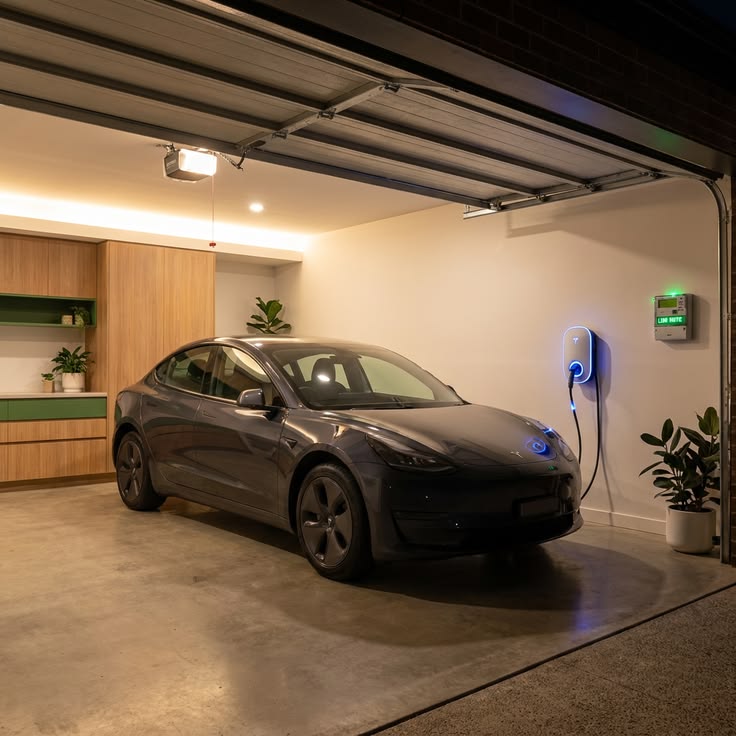
A home Level 2 EV charger installation in Denver typically runs $750 to $2,200. The low end is an attached garage with the panel on the shared wall and open breaker spaces — a short run, a 240V circuit, a mount and commissioning. The high end is a detached garage, a long conduit run across a finished space, an outdoor rated installation, or a panel that needs a subpanel or a service upgrade before it can carry the load.
The two things that reliably change the number are distance and panel capacity. Everything else — charger brand, plug-in versus hardwired, 40A versus 48A — has a much smaller effect on labor than people expect.
Which chargers work with which panels
Almost every consumer Level 2 charger sold in the United States is a 240V unit drawing between 24A and 48A, which means a 30A, 40A, 50A or 60A dedicated breaker. The question is never really brand compatibility — it is whether your service can carry the continuous load after a proper calculation.
- 200A service with open spaces: almost always straightforward. A 48A charger on a 60A breaker is usually fine.
- 100A service: often workable at a lower amperage, or with a load-management device. This is where a load calculation matters most.
- 60A service: expect a service upgrade first. Read the Denver panel upgrade cost guide below before you buy the charger.
- Federal Pacific or Zinsco panel: we will not add a high-continuous-load circuit to one. The panel gets replaced first.
- Plug-in (NEMA 14-50) versus hardwired: hardwired is required for 48A units and is generally cleaner outdoors. Plug-in is fine for 40A and below and makes swapping units easier.
When the panel is already full
A full panel is not a dead end and it does not automatically mean a service upgrade. There are three normal paths: consolidate and add a subpanel, install a load-management or energy-sharing device that lets the charger back off when the house draws hard, or upgrade the service to 200A. We price all three when they apply and tell you which one we would pick for your house.
Permits and inspection in Denver
Yes, a permit is required. Adding a 240V branch circuit for EV charging is permitted work in Denver and in Aurora, Littleton, Douglas County, Lakewood and the rest of the metro. A final inspection follows the install. We pull the permit as part of the quoted price and meet the inspector on site — an unpermitted charger circuit is the kind of thing that surfaces awkwardly during a home sale or an insurance claim.
Level 1 versus Level 2
Level 1 is the cord that came in the trunk plugged into an ordinary 120V outlet. It adds roughly three to five miles of range per hour, which is fine for a plug-in hybrid or a very short commute and painful for anything else. Level 2 runs on a dedicated 240V circuit and adds roughly 20 to 40 miles of range per hour, so an empty battery refills overnight. For a full battery-electric vehicle in Colorado — where cold weather costs range — Level 2 is what makes home charging actually work.
How long installation takes
A typical attached-garage job is three to six hours, start to finish, in one visit: mounting the unit, running the circuit, terminating at the panel, energizing and commissioning the charger with your app. Detached garages, trenching, long finished-wall runs and panel work extend that, and anything involving a service upgrade becomes a full-day job. We tell you which one yours is before we book it.
What to check before you buy a charger
- Your service size and free breaker spaces. Photograph the panel label and the inside of the door and send it to us — that answers most questions in a minute.
- Where the car actually parks, and which side the charge port is on. Cable length is the most common regret.
- Indoor or outdoor. Outdoor mounting needs a unit rated for it and a weatherproof installation.
- Hardwired versus plug-in, based on the amperage you actually want.
- Whether you want energy monitoring or utility program compatibility — some Xcel programs favor specific capabilities.
- Whether a second vehicle is coming. It is far cheaper to size for two now than to redo the work later.
Related work
See our EV charger installation service, or the panel upgrade cost in Denver if your service needs to come up to 200A first. Call (303) 257-5716 and we will tell you which one you need.
EV charger installation questions
- How much does EV charger installation cost in Denver?
- Most Level 2 installations run $750 to $2,200, which covers the dedicated 240V circuit, the mount, commissioning and the permit. Long conduit runs, detached garages and panel work move the price toward the top.
- Can you install an EV charger if my panel is full?
- Usually, yes. We can add a subpanel, install a load-management device that shares an existing circuit safely, or upgrade the service. We walk you through the cheapest path that still passes inspection.
- Is a permit required for an EV charger in Denver?
- Yes. A new 240V branch circuit is permitted work in Denver and in the surrounding jurisdictions, and it gets a final inspection. We pull the permit and meet the inspector.
- How long does the installation take?
- A typical attached-garage installation takes three to six hours in a single visit. Detached garages, finished basements and panel upgrades add time and are quoted before we start.
- What is the difference between Level 1 and Level 2 charging?
- Level 1 uses a standard 120V outlet and adds roughly three to five miles of range per hour. Level 2 uses a dedicated 240V circuit and adds roughly 20 to 40 miles per hour, which is why nearly every homeowner ends up on Level 2.
Ready for home charging?
Free consultation, honest scope, fair pricing — across Denver and Castle Rock.